
A cutting chai for whoever is still awake editing this.
Illustrative names from across India. We do not run a membership register — join at the official movement.
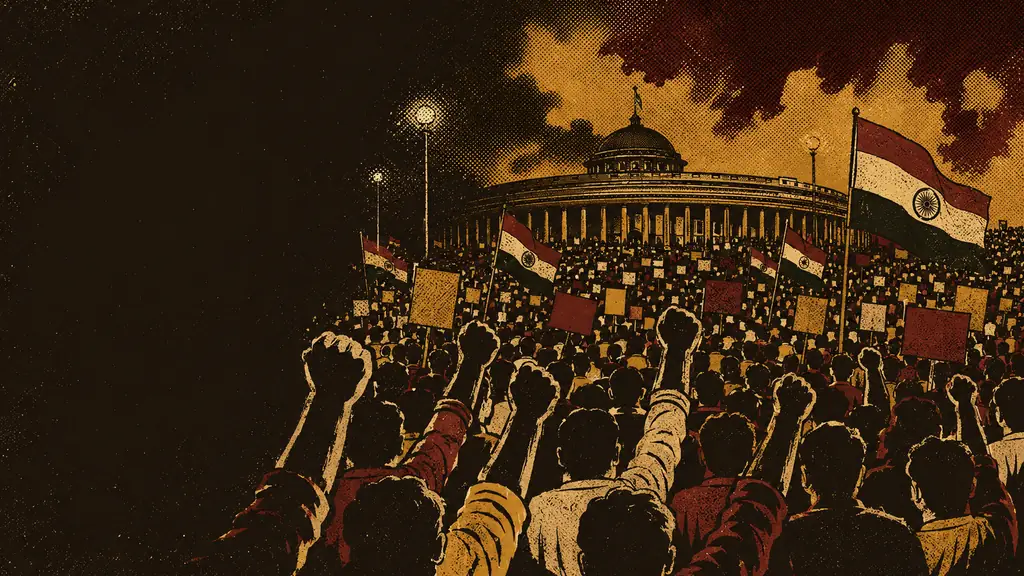
- Sahil Saini, Jaipur
- Vaibhav Sawant, Thane
- Praveen Menon, Guntur
- Sourav Mahato, Ranchi
- Temjen Tripura, Dimapur
- Suresh Shukla, Bhopal
- Sahil Rawat, Kota
- Vaibhav Bhosale, Silvassa
- Divyashree Iyengar, Kollam
- Kumari Sarkar, Siliguri
- Thangjam Baruah, Dimapur
- Swati Baghel, Bilaspur
- Rahul Nagpal, Meerut
- Ketan Shah, Daman
- Vivek Iyengar, Chennai
- Rittika Das, Ranchi
- Banri Baruah, Aizawl
- Deepak Namdeo, Raipur
- Deepender Rawat, Ludhiana
- Bhavya Kulkarni, Solapur
- Anitha Pillai, Tirupati
- Soumen Behera, Patna
- Imlisanen Lepcha, Badarpur
- Vaishnavi Dubey, Raigarh
- Deepender Sharma, Dehradun
- Chirag Sawant, Aurangabad
- Keerthi Iyengar, Salem
- Saumya Chatterjee, Patna
- Kaushik Deka, Jorhat
- Bhoomika Dubey, Bhilai
- Khushboo Sethi, Varanasi
- Omkar Patil, Vadodara
- Naveen Shetty, Coimbatore
- Nandini Bose, Puri
- Lalrinpuii Bora, Imphal
- Ayushi Chandouria, Bhopal
- Vikas Saini, Leh
- Rohan Jadhav, Surat
- Lakshmi Hegde, Kollam
- Bikash Mahato, Cuttack

Independent guide · updated July 2026
Cockroach Janta Party, explained.
Five demands · one timeline · zero affiliation
India's Gen-Z protest movement began as a reclaimed insult and ended a minister's career. Here is what it actually demands, what happened at Jantar Mantar, and where to join — sourced, dated, and written by volunteers.
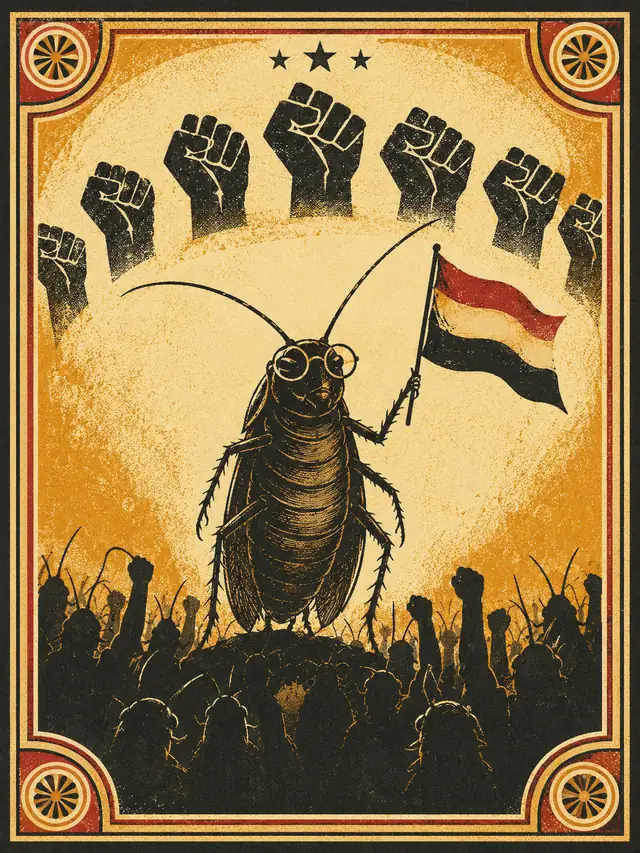
- 15 May 2026 · CJI Surya Kant calls jobless youth “cockroaches”
- 16 May 2026 · Cockroach Janta Party founded in response
- 06 Jun 2026 · First street protest at Jantar Mantar
- 28 Jun 2026 · Sonam Wangchuk begins hunger strike
- 20 Jul 2026 · Chalo Sansad march met with lathi charge
- 25 Jul 2026 · Education Minister Dharmendra Pradhan resigns
Chapter one
Why any of this happened.
On 15 May 2026 the Chief Justice of India, hearing a case about fake law degrees, described young people who turn to activism and social media as cockroaches and parasites of society. He later clarified that he meant only those with fraudulent credentials. The clarification did not travel nearly as far as the insult.
The next day a 24-year-old communications strategist from Aurangabad registered the name Cockroach Janta Party and took the slur as a badge. Within two weeks the movement had more Instagram followers than the ruling party. Within two months a Union Education Minister had resigned.
This page is not run by them. We are volunteers who thought a movement this large deserved one place that explains it properly — sourced, dated, and in two languages — instead of a dozen sites copying the same paragraph.
The five demands
The manifesto.
Five demands, published by the movement in May 2026. We quote each one exactly as it stands, then explain in plain language what it would actually change — because a list on its own tells you nothing.
01. No Rajya Sabha seats for retiring judges
“If the CJP comes in power, no Chief Justice shall be granted a Rajya Sabha seat as a post-retirement reward.”
What this would actually change
A judge who expects a government appointment after retirement has a reason to rule kindly toward that government in their final years on the bench. The demand does not accuse anyone of doing this; it removes the incentive so the question stops arising. It would need a change to how Rajya Sabha nominations work, not a constitutional amendment.
02. Criminal liability for deleted votes
“If any legit vote is deleted, whether in a CJP or opposition-ruled state, the CEC shall be arrested under UAPA, as taking away voting rights of citizens is no less than terrorism.”
What this would actually change
The deliberately extreme part is invoking UAPA, an anti-terror law that civil liberties groups have long criticised. Read as satire, that is the point: it holds a mirror to how readily the law gets used against protesters and how rarely against officials. The serious core underneath is real — there is currently no meaningful personal penalty for wrongful deletion from an electoral roll.
03. 50% reservation for women, now
“Women shall receive 50% reservation, not 33%, without increasing the strength of Parliament. Additionally, 50% of all Cabinet positions shall be reserved for women.”
What this would actually change
The load-bearing phrase is "without increasing the strength of Parliament". The 2023 women's reservation act was passed but tied to a future census and delimitation exercise, which pushed it years down the road. This demand strips out that delay by applying the quota to the seats that already exist. The Cabinet half has no precedent in Indian law and would be the harder fight.
04. Break the media monopolies
“All media houses owned by Ambani and Adani shall have their licences cancelled to make way for truly independent media. Bank accounts of Godi media anchors shall be investigated.”
What this would actually change
Two industrial groups control a large share of India's television news reach, and "Godi media" is the popular shorthand for outlets seen as uncritical of the government. Cancelling licences outright would run straight into free-speech protections — which is arguably the joke. The serious question it raises is one India has never properly legislated: how much of the news should any one owner be allowed to own?
05. Twenty years out for defectors
“Any MLA or MP who defects from one party to another shall be barred from contesting elections — and from holding any public office — for a period of 20 years.”
What this would actually change
India already has an anti-defection law — the Tenth Schedule, added in 1985 — but it is routinely worked around by resigning, by engineering a two-thirds split, or by simply accepting disqualification and winning the by-election. Twenty years is longer than most political careers, which is the point: it makes the arithmetic of buying a legislature stop working.
Other sites publish different lists — one has a joke manifesto about free wifi and afternoon naps, another lists 55% women's reservation and a 48-hour grievance window. The five above are the ones published on the movement's own site.
Who actually turned up
Faces of the movement.
Not everyone who posted about it — everyone who did something. Each line below describes a documented act: a fast, a march attended, a statement made on the record.
Opposition politicians across several parties also endorsed the demands publicly. We have left them off this list: endorsing a demand from a podium is a different thing from turning up at Jantar Mantar, and blurring the two would flatter both.
- Abhijeet Dipke, Founder & convenor. Registered the party on 16 May 2026, the day after the remark. Began a fast at Jantar Mantar on 18 July and was hit with blue ink the same day.
- Saurav Das, Chief spokesperson. Investigative journalist. Fronted the movement's press engagement through the Jantar Mantar weeks.
- Ashutosh Ranka, Co-spokesperson. Former McKinsey consultant and IIT Kanpur alumnus who writes on education policy.
- Sonam Wangchuk, Engineer & climate activist. Fasted 26 days from 28 June, losing 9.1 kg. Forcibly hospitalised on 18 July and resumed from his bed. Called himself an honorary cockroach.
- Prashant Bhushan, Activist-lawyer. Publicly backed the movement's demands during the protest weeks.
- Anna Hazare, Social activist. Voiced support — a notable one, given his own hunger strikes shaped the last mass anti-corruption movement in Delhi.
- Anjali Bhardwaj, RTI activist. Backed the movement's transparency and accountability demands.
- Greta Thunberg, Climate activist. Spoke at the solidarity rally in Trafalgar Square, London, on 26 July.
- Prakash Raj, Actor. Attended the Jantar Mantar protest in Delhi and joined the Bengaluru gathering at Freedom Park.
- Atul Kulkarni, Actor. Publicly urged young citizens to join the Delhi protest.
- Naseeruddin Shah, Actor. Among the film figures who publicly supported the movement.
- Ratna Pathak Shah, Actor. Publicly supported the movement during the protest weeks.
- Sonakshi Sinha, Actor. Publicly supported the movement during the protest weeks.
- Mammootty, Actor. Among the Malayalam film figures who publicly backed the students.
- Tovino Thomas, Actor. Publicly backed the students from the Malayalam film industry.
- Hanumankind, Rapper. Among the hip-hop artists who performed at or attended the protest sites.
- KRSNA, Rapper. Part of the hip-hop contingent present at the protests.
- Neha Bora, National president, AISA. One of six AISA members who joined the hunger strike alongside Wangchuk.
- Aishe Ghosh, Joint secretary, SFI. Among the student leaders organising at Jantar Mantar.
- Adarsh M. Saji, President, SFI. Helped coordinate the student organisations behind the protest.
The record
As reported elsewhere.
We are not a news outlet. Everything on this page is traceable to reporting by people who are — read them directly.
- BBCIndia has a new political superstar — a cockroach21 May 2026
- AP NewsFrustrated Indian youth flock to a political party led by a cockroach22 May 2026
- Al JazeeraTop Indian judge's comment sparks satire, protest20 May 2026
- ABC News (Australia)CJP amasses support of millions in just days22 May 2026
- CNNIndia's viral youth movement hits the streets of the capital26 Jun 2026
- NPRIndia's Gen Z 'Cockroach People's Party' started as satire20 Jul 2026
- BritannicaWhat Is the Cockroach Janta Party?1 Jul 2026
- The Boston GlobeBefore CJP went viral, its founder was learning media strategy in Boston28 Jul 2026
Membership
Are you eligible to join?
The movement's own entry criteria, published on its site. There are four, they are a joke, and the joke is the point — every one of them is an insult that got aimed at a generation and then adopted on purpose.
Criteria as published by the official movement ·cockroachjantaparty.org ↗
Membership is free and handled entirely by the movement. We cannot enrol you, and we never collect your details.
In their footsteps
They were younger than you.
Bhagat Singh was 23. Khudiram Bose was 18. Kanaklata Barua was 17, and she was carrying a flag when they shot her. Every right the swarm uses today — to gather, to shout, to demand an answer — was paid for by people who never lived to use them.
Swatantrata · Samata · Bandhuta · Nyaya — freedom, equality, fraternity, justice.
- Bhagat Singh, 1907–1931. Revolutionary, HSRA. Twenty-three, and he read Lenin in his cell until the last hour. He wanted the deaf to hear — not to kill, but to be heard.
- Sukhdev Thapar, 1907–1931. Revolutionary, HSRA. He organised study circles before he organised anything else. He believed a generation had to understand its chains before it could break them.
- Shivaram Rajguru, 1908–1931. Revolutionary, HSRA. Twenty-two. He asked to be hanged first, so he would not have to watch his friends go.
- Chandra Shekhar Azad, 1906–1931. Commander, HSRA. He swore they would never take him alive, and they never did. At fifteen he told a magistrate his name was Azad — free.
- Khudiram Bose, 1889–1908. Revolutionary. Eighteen years old on the gallows. Witnesses wrote that he walked to them smiling. Schoolboys in Bengal wore dhotis printed with his name.
- Ram Prasad Bismil, 1897–1927. Poet, Kakori conspirator. He gave the movement its anthem — Sarfaroshi ki Tamanna — and then gave it his life. Poets are dangerous when they mean it.
- Ashfaqulla Khan, 1900–1927. Kakori conspirator. He and Bismil were Muslim and Hindu, and inseparable. Those who would divide this country should study how they died — together.
- Birsa Munda, 1875–1900. Adivasi leader, Ulgulan. Twenty-five when he died in a colonial jail. He fought for forest and land — the first fight, and somehow still an unfinished one.
- Kanaklata Barua, 1924–1942. Quit India martyr. Seventeen, carrying the flag toward a police station in Assam. They shot her. The girl behind her picked the flag up and kept walking.
- Matangini Hazra, 1870–1942. Quit India martyr. Seventy-two years old, shot three times, and she would not let the flag touch the ground. Courage does not check your age.
- Pritilata Waddedar, 1911–1932. Revolutionary, Chittagong. A schoolteacher at twenty-one who led an armed raid on a club whose sign read 'Dogs and Indians not allowed'.
- Rani Gaidinliu, 1915–1993. Naga spiritual & political leader. Arrested at sixteen. Sentenced to life. She walked out of prison fourteen years later, at thirty, and kept going.
- Rani Lakshmibai, 1828–1858. Queen of Jhansi, 1857. Twenty-nine, on horseback, refusing to surrender a kingdom she was told she had no right to rule.
- Begum Hazrat Mahal, 1820–1879. Leader of Awadh, 1857. She held Lucknow against an empire and died in exile rather than accept its pension. Some people simply cannot be bought.
- Velu Nachiyar, 1730–1796. Queen of Sivaganga. She fought the British and won, decades before 1857. India's resistance did not begin where the textbooks start it.
- Kittur Rani Chennamma, 1778–1829. Queen of Kittur. She took up arms against the Doctrine of Lapse and lost, and Karnataka has sung about her for two hundred years anyway.
- Bhikaji Cama, 1861–1936. Revolutionary, exile. In Stuttgart in 1907 she unfurled an Indian flag on foreign soil and dared the room to salute it. Most of them stood.
- Durgawati Devi, 1907–1999. Revolutionary, 'Durga Bhabhi'. She posed as Bhagat Singh's wife to walk him past police out of Lahore, infant son on her hip. History barely says her name.
- Aruna Asaf Ali, 1909–1996. Quit India leader. With every senior leader in jail, she hoisted the flag at Gowalia Tank and went underground for four years.
- Usha Mehta, 1920–2000. Congress Radio operator. At twenty-two she ran a secret radio station so the movement could hear itself think. They jailed her for four years for broadcasting.
- Captain Lakshmi Sahgal, 1914–2012. INA, Rani of Jhansi Regiment. A doctor who commanded an all-women regiment, and then spent sixty more years treating the poor for almost nothing.
- Subhas Chandra Bose, 1897–1945. Founder, Azad Hind Fauj. He asked for blood and was given an army. He also insisted that army have a women's regiment, in 1943.
- Dr B. R. Ambedkar, 1891–1956. Architect of the Constitution. He wrote the document that lets you protest at all. Every right the swarm is exercising today came off his desk.
- Mahatma Gandhi, 1869–1948. Leader, non-violent resistance. He proved a hunger strike could move an empire. Ninety years later, at Jantar Mantar, someone tried it again.
- Sarojini Naidu, 1879–1949. Poet, Congress president. The Nightingale of India led the Dharasana salt raid after Gandhi's arrest and told the marchers not to raise a hand, even to defend themselves.
- Lala Lajpat Rai, 1865–1928. Leader, Punjab Kesari. Beaten by police at a peaceful march, he said every blow would be a nail in the empire's coffin. He died of the injuries weeks later.
Support the volunteers
Buy the swarm a chai.
This page is built and maintained by volunteers in our own time. The movement itself takes no money and we would not ask on its behalf. If this guide was useful, you can buy whoever wrote it a cup of tea.
Tap the card to add another.
The full tapri experience.
Thali-grade gratitude.
A night's stay for a volunteer far from home.
For the generous. Recognition on the wall, if you want it.
Type any amount on the next page.
🔒 Payments handled entirely by Razorpay. We never see your card details.
Important notice
Payments made here are voluntary personal contributions to the independent volunteers who write and maintain this page.
They are not:
- political donations
- election contributions
- charitable donations
- NGO funding
- membership fees
- support for the Cockroach Janta Party movement
Supporting does not grant:
- party membership
- voting rights
- political influence
- editorial control
- advertising or sponsorship
- special privileges
Official patrons · 001
The swarm's top patrons.
Verified supporters who bought the volunteers a chai. Amounts stay private — this is a thank-you, never an advertisement.
#001
Be patron #001
Nobody yet. The first slot is open.
Questions
The obvious questions.
Is this the official Cockroach Janta Party website?
No. This is an independent volunteer page about the movement. The official Cockroach Janta Party site is cockroachjantaparty.org. We are not affiliated with, endorsed by, or connected to the movement or its founder, and nobody here speaks for it.
What are the five demands of the Cockroach Janta Party?
No Rajya Sabha seats for retiring Chief Justices; criminal liability for deleted votes; 50% women's reservation in Parliament and Cabinet without expanding the House; cancellation of Ambani- and Adani-owned media licences; and a twenty-year bar on legislators who defect.
Who founded the Cockroach Janta Party?
Abhijeet Dipke, a 24-year-old political communications strategist from Aurangabad, Maharashtra, with a master's from Boston University and earlier work with the Delhi government. He registered the party on 16 May 2026, one day after the remark that gave it its name.
Why is it called the Cockroach Janta Party?
On 15 May 2026 the Chief Justice of India described young people turning to activism and social media as cockroaches and parasites of society. The name takes the insult and wears it, the way Tories, Quakers and Suffragettes each began as slurs before the targets adopted them.
Is the Cockroach Janta Party a registered political party?
No. It is not registered with the Election Commission of India and fields no candidates. It describes itself as a pressure coalition and a platform rather than a conventional party. This website is not a registered party either.
How do I join the Cockroach Janta Party?
Through the official movement at cockroachjantaparty.org. Membership is free and handled entirely by them. This page cannot enrol you, does not maintain a member register, and never collects your personal details.
What happened at the Jantar Mantar protests in 2026?
Protests ran from 6 June to 25 July 2026 over NEET-UG paper leaks, demanding the Education Minister's resignation. Sonam Wangchuk fasted 26 days. The 20 July march on Parliament met a lathi charge and tear gas. Dharmendra Pradhan resigned on 25 July.
Where does money paid on this page go?
To the volunteers who write and maintain this page, and nowhere else. It is not a political donation, an election contribution, a charitable donation, or support for the Cockroach Janta Party — the movement takes no funding and we would not collect on its behalf.
Support the volunteers
Buy the swarm a chai.
This page is built and maintained by volunteers in our own time. The movement itself takes no money and we would not ask…


